
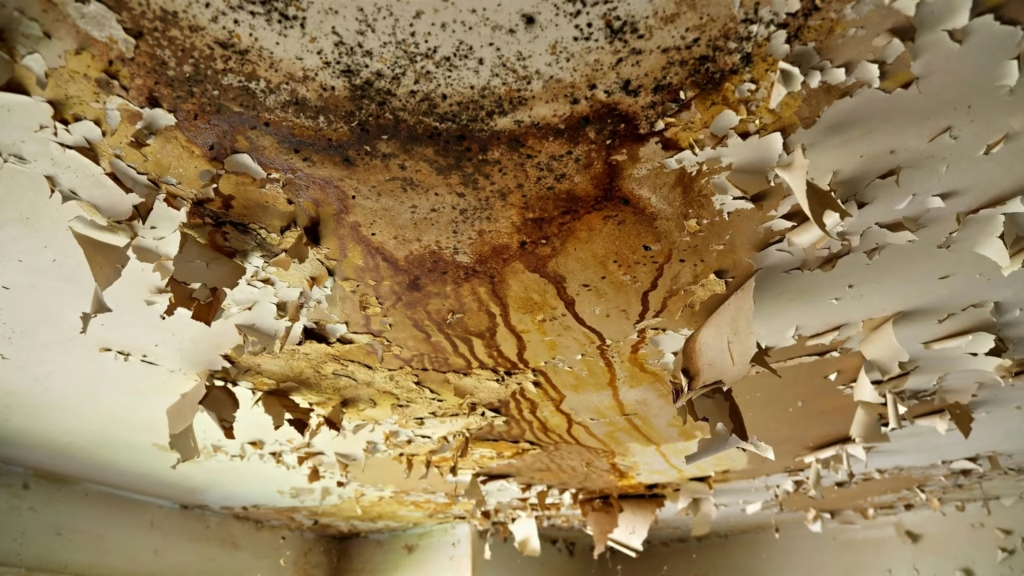
Wet drywall can sometimes be saved and sometimes can't. Replacing it unnecessarily costs money. Keeping drywall that should have been removed can lead to mold and a ceiling that fails later. The condition of the drywall and how long it stayed wet tell you which case you have.
Signs the drywall can usually be saved
Drywall that is firm, flat, and only discolored often dries without permanent damage if the water was cleaned up and the area dried quickly. A small stain on a ceiling that stays hard to the touch and dries within a day or two is usually a candidate for sealing and repainting once the leak has been repaired.
Signs it should be replaced
Replace drywall that is soft, crumbly, or sagging. The paper facing can come away from the gypsum core, and once the board loses its strength, it won't regain it. Replace it if it stays wet for more than 48 hours, since the EPA's guidance is that porous materials that remain wet that long often need to be removed. Replace it if you see or smell mold, if it has swelled or warped, or if the wet area is large.
A simple test is to press a screwdriver gently into the ceiling. If it goes in easily, the board is too soft to keep.
Check what's behind it
Wet drywall is often a sign that insulation and framing above it are wet too. Insulation that stays wet loses its ability to insulate and holds moisture against the wood. Before you patch the ceiling, open it enough to look. If the insulation is soaked, remove and replace it.
Fix the roof first
Don't repair the ceiling until the leak is fixed and the area is dry. A new patch under a leaking roof will stain and deteriorate along with the old drywall. See our guide on water damage from a roof leak for the full repair process.
Dry it properly
Use fans and a dehumidifier, and leave the area open to air if the weather allows. Check the moisture level over several days. Drywall can feel dry on the surface while the inside is still damp. A moisture meter, which a contractor or restoration company can use, gives a reliable answer.
Repair options
For a small stain on sound drywall, use a stain-blocking primer and repaint. For a small damaged area, cut out the soft section, install a new piece, tape and mud the joints, sand, prime, and paint. For a large area or a sagging ceiling, replace a bigger section or the full ceiling. If your ceiling has a texture, it needs to be matched so the repair doesn't show. For bigger jobs, see our ceiling leak repair service.
Safety notes
When cutting out wet or moldy drywall, wear a mask, gloves, and eye protection. Stand to the side of any section that may release water. If the area of mold is larger than about 10 square feet, the EPA suggests consulting its mold remediation guidance or a professional.
Get the roof leak sorted first
If you have wet drywall and haven't had the roof inspected, call (630) 866-1445 and describe what happened. The roof needs to be fixed before the ceiling is. For local roof leak repair, call the same number.
Carol Stream Roofing, 480 Aztec Dr, Carol Stream, IL 60188. (630) 866-1445
Carol Stream Leak & Restoration is a free referral service. We connect Carol Stream homeowners with independent local roofing contractors — no fees to you, ever. Call (630) 866-1445 for fast help with a roof leak.