

Will Homeowners Insurance Cover a Roof Leak in Illinois?
You found a water stain spreading across your ceiling, and the first question after “how bad is it?” is usually does homeowners insurance cover roof leaks? The answer is: sometimes — it depends entirely on what caused the leak, not on how bad the damage looks. A leak from last week’s hailstorm is a very different claim from a leak caused by 25-year-old shingles quietly giving up.
This guide explains how coverage typically works in Illinois, what’s usually covered and excluded, and how to file a claim that actually gets approved. General information only — this is not legal or insurance advice. Your policy’s declarations page and your agent are the final word on your coverage.
If you have an active leak right now, don’t wait for the claim paperwork — get emergency roof leak repair first to stop the damage, then sort out the claim. Insurers expect you to mitigate further damage.
The Short Answer
Homeowners insurance typically covers roof leaks caused by sudden, accidental events — what policies call “covered perils.” It generally does not cover leaks caused by age, wear and tear, or neglected maintenance.
Usually covered: windstorms, hail, fallen trees or branches, fire, lightning, and the weight of ice, snow, or sleet.
Usually NOT covered: old or deteriorating shingles, long-term neglect, faulty installation, mold from a slow long-term leak, and floodwater (which needs a separate flood policy).
The gray area — and where most claims are won or lost — is proving the leak came from a sudden event rather than gradual deterioration. Documentation is everything.
What’s Typically Covered (and How)
A standard HO-3 homeowners policy has several coverage parts that can come into play after a covered roof leak:
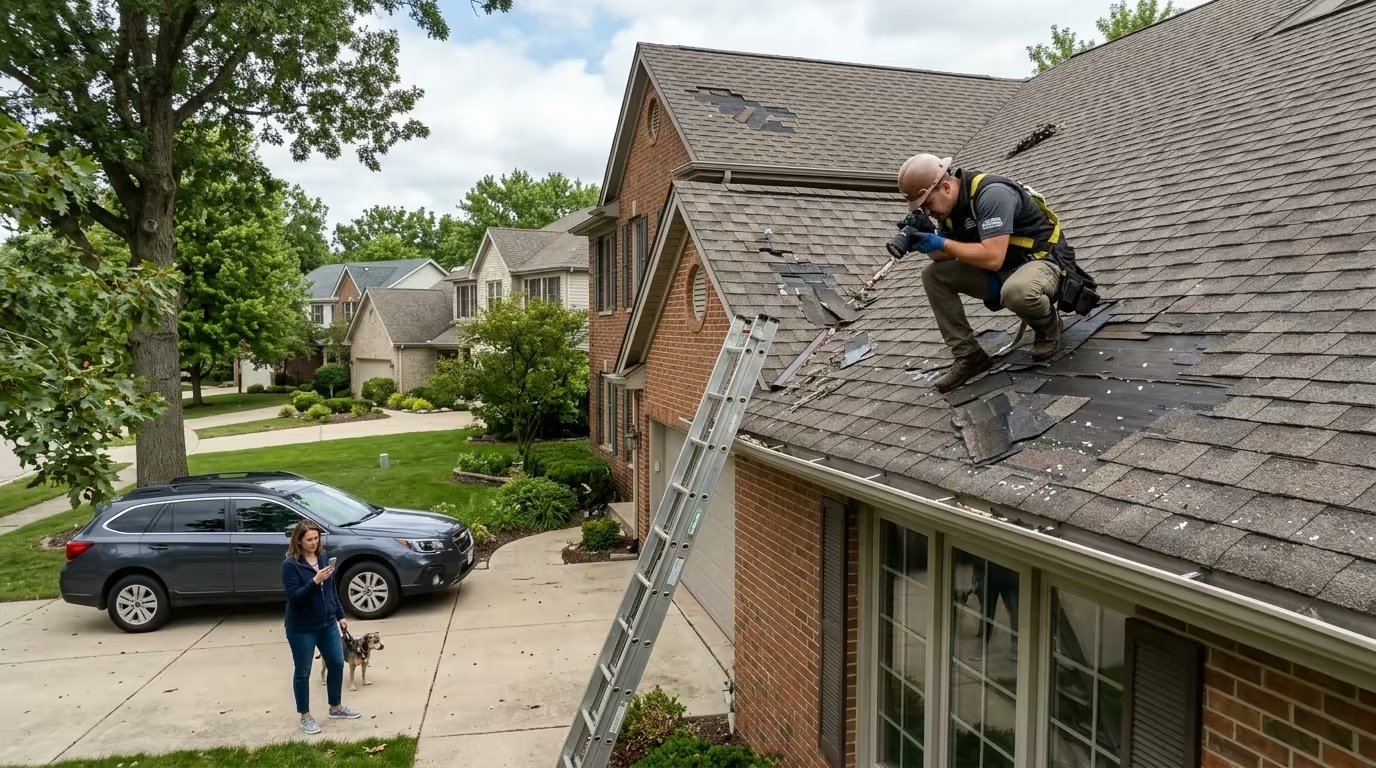
- Dwelling coverage (Coverage A): Pays to repair or replace the damaged roof itself — the shingles, flashing, and decking harmed by the covered peril.
- Other structures (Coverage B): Applies if the leak damaged a detached garage or shed roof.
- Personal property (Coverage C): Covers belongings ruined by the water — furniture, electronics, clothing in the attic.
- Loss of use / additional living expenses (Coverage D): Reimburses hotel and meal costs if the damage makes your home uninhabitable during repairs.
Note that insurers often handle the roof repair and the interior water damage roof repair as related but separate evaluations. Keep receipts and photos for both.
Illinois-Specific Perils Worth Knowing
Illinois roofs face a particular lineup of covered perils, and it helps to know them by name when you talk to your adjuster:
- Hail: Northern Illinois sees regular hail season from spring through early fall. Even small hail bruises shingles and cracks flashing — damage that’s often invisible from the ground. Our storm damage roof leak guide covers what hail damage looks like.
- Straight-line winds and derechos: The 2020 Midwest derecho reminded everyone that Illinois gets hurricane-force straight-line winds. Wind-lifted or torn shingles are classic covered claims.
- Weight of ice and snow: Heavy snow loads and ice dam roof leaks are explicitly covered perils under most policies’ “weight of ice, snow, or sleet” language — though insurers will ask about your maintenance (clean gutters, adequate insulation).
- Fallen trees: Summer storms drop limbs on roofs across DuPage County every year. Sudden impact damage is squarely covered.
Common Exclusions That Sink Claims
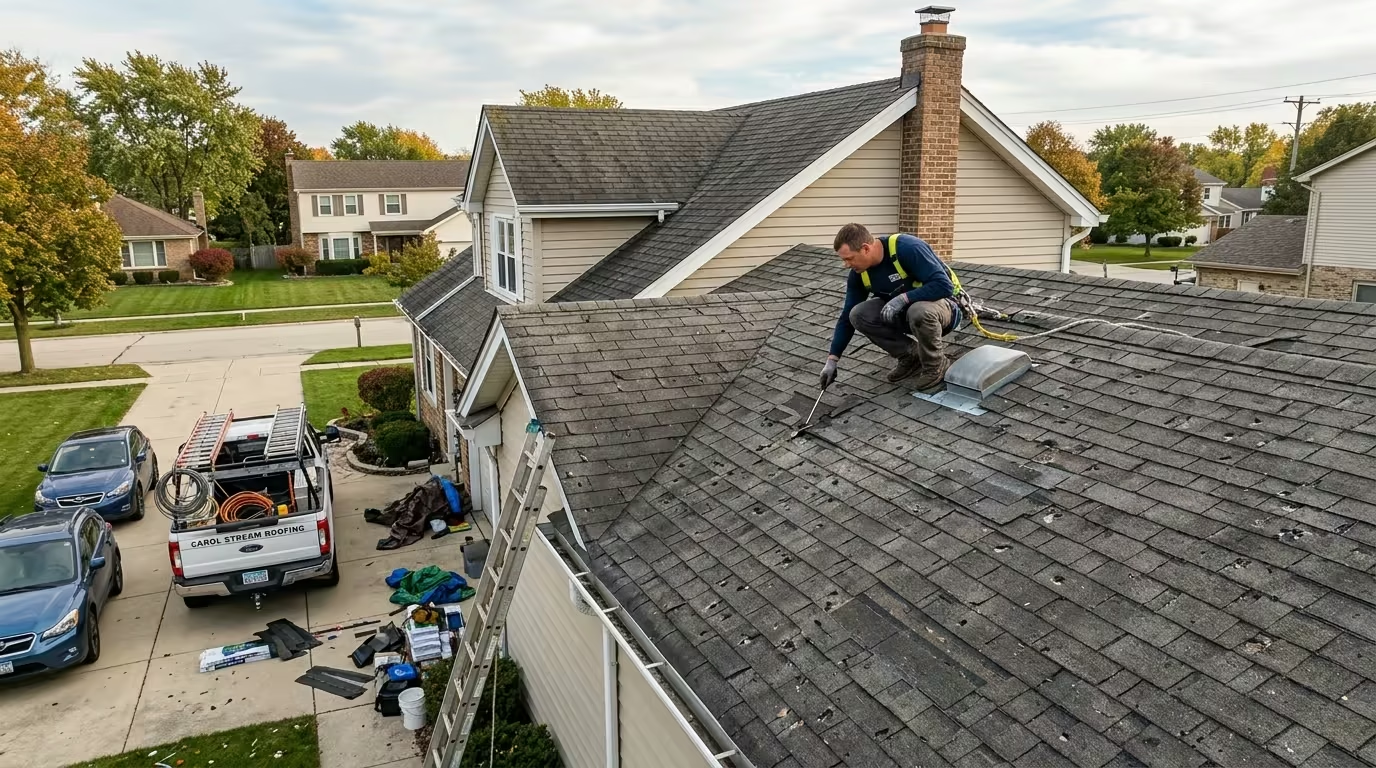
Knowing what isn’t covered saves you from filing a claim that gets denied and still counts against your claims history:
| Exclusion | What it means in practice |
|---|---|
| Wear and tear / deterioration | A 22-year-old shingle roof leaking from age — not covered |
| Neglect / faulty maintenance | Clogged gutters, unrepaired flashing, ignored prior leaks |
| Faulty workmanship | Bad installation by a previous contractor (may be their liability, not insurance) |
| Long-term seepage | A leak that dripped for months before you noticed — insurers call this preventable |
| Mold from long-term leaks | Sudden-event mold may be covered; gradual mold is excluded |
| Flooding | Rising water from outside needs separate NFIP flood insurance |
| Earth movement | Sinkholes, settling — separate endorsements if available |
The single most common denial reason: the adjuster determines the damage is wear and tear, not storm damage. This is why maintenance records and prompt reporting matter so much.
How to File a Roof Leak Claim: Step by Step
- Stop the damage first. Arrange a temporary roof repair — tarp, patch, or emergency service. Policies require you to mitigate further damage; failing to do so can reduce your payout.
- Document everything. Photograph the leak, stains, damaged belongings, and — safely, from the ground or a ladder at the eave — the roof damage. Note the date and weather event you believe caused it.
- Review your policy. Check your declarations page for your deductible (flat dollar or percentage), any wind/hail deductible, and whether your roof is covered at replacement cost or actual cash value (ACV). Older roofs are often ACV-only, which means depreciation is subtracted.
- Call your insurer promptly. Most policies require prompt notification. Give facts, not theories: what happened, when, and what damage you see.
- Meet the adjuster. Be present for the inspection. Point out all damage, share your photos, and mention any contractor assessments you’ve received. You can also get an independent inspection beforehand so you know what to point out.
- Get contractor estimates. Once the claim is approved, get written quotes for the work. If the insurer’s estimate seems low, your contractor can submit a supplement with photo documentation.
- Keep every receipt. Emergency repairs, tarps, hotel stays — all potentially reimbursable under the right coverage parts.
Should You Even File? Do the Deductible Math
Filing isn’t always smart. Claims can raise premiums, and small claims may pay almost nothing after your deductible. Run the numbers:
| Scenario | Repair estimate | Deductible | Likely payout | Worth filing? |
|---|---|---|---|---|
| Minor flashing repair after wind | $800 | $1,500 | $0 | No — pay out of pocket |
| Moderate storm damage | $4,000 | $1,500 | ~$2,500 | Probably yes |
| Major hail damage, full slope | $9,000 | $2,500 | ~$6,500 | Yes |
| Old roof, wear-and-tear leak | $3,000 | $1,500 | $0 (excluded) | No — will be denied |
Also consider: two claims in three years can trigger non-renewal with some carriers. Save your claims for the big ones, and pay for maintenance-level repairs yourself. If you’re unsure, ask your agent hypothetically before formally filing — once filed, it’s on your record.
Tips to Avoid a Denial
- Maintain the roof and prove it. Annual inspection notes, gutter cleaning receipts, and records of past repairs are your best defense against a “neglect” denial.
- Report promptly. Waiting months to report a leak invites the “long-term seepage” exclusion.
- Don’t throw away damaged materials until the adjuster has seen them.
- Be accurate, not creative. Exaggerating damage destroys credibility; stick to what you can document.
- Know your roof’s age. If your roof is 20+ years old, expect an ACV settlement discussion — ask your agent now, before a storm, whether replacement-cost endorsement is available.
Frequently Asked Questions
Does homeowners insurance cover roof leaks from old age?
No. Standard policies exclude wear and tear and gradual deterioration. If your shingles are simply at the end of their life, the replacement cost is considered a maintenance expense, not an insurable loss.
Will insurance pay for a full roof replacement or just repairs?
It depends on the extent of the covered damage and your policy terms. Isolated damage usually means repair payment; widespread damage from a covered peril can trigger full replacement. Older roofs may be settled at actual cash value (depreciated), which covers less than replacement cost.
Does insurance cover ice dam damage in Illinois?
Often, yes — most policies list “weight of ice, snow, or sleet” as a covered peril, which includes resulting water intrusion. But insurers may deny if they find neglected maintenance (like chronically clogged gutters) contributed. Document the event and your maintenance.
What if my claim is denied?
Ask for the denial in writing with the specific policy language cited. You can appeal with additional documentation, request a re-inspection, hire a public adjuster, or file a complaint with the Illinois Department of Insurance if you believe the denial was improper.
Should I get a contractor inspection before filing?
It’s often wise. An independent inspection tells you whether the damage looks like a covered peril or wear and tear — so you don’t file a doomed claim. Many reputable local pros offer storm damage inspections with photos.
Does filing a roof claim raise my premiums?
It can. A single weather-related claim often has modest impact, but multiple claims in a few years can raise rates or affect renewal. This is why the deductible math above matters — don’t file claims that pay little.
Dealing With a Leak Right Now?
Whether or not insurance will cover it, the leak needs to stop today. Get the damage controlled, get it documented, and then work the claim with photos in hand.
Further Reading
- Illinois Department of Insurance — the state regulator for homeowners insurance questions
- HomeAdvisor: How Much Does It Cost to Repair a Roof? — national average roof-repair cost data
External links open in a new tab and are provided for reference; we are not affiliated with these publishers.
Roof leaking in Carol Stream? Get help fast.
Call Carol Stream Leak & Restoration at (630) 866-1445 — we’ll connect you with a local repair professional serving Carol Stream, Bloomingdale, Glendale Heights, Wheaton, Hanover Park, Bartlett, and West Chicago.
Carol Stream Leak & Restoration is a local referral service that connects homeowners with independent local repair professionals; it is not a roofing contractor.