

Water coming through the ceiling usually starts at a bad time, like in the middle of a storm or on a Friday night. The first hour matters. Water that keeps soaking into insulation and drywall does more damage with every passing hour, and a few quick steps can limit it until a roofer gets there.
Make sure everyone is safe first
Look at the ceiling before you touch anything. If it sags or bulges, stay out from under it. A bulge means water is pooling above, and drywall can give way without warning.
If water is dripping near a light fixture, ceiling fan, or outlet, switch off the power to that room at the breaker. Don’t touch wet fixtures or switches while standing in water.
Stay off the roof. Wet shingles are slippery, and climbing up in the rain to hunt for the leak is how homeowners get hurt. You can learn what you need from the inside.
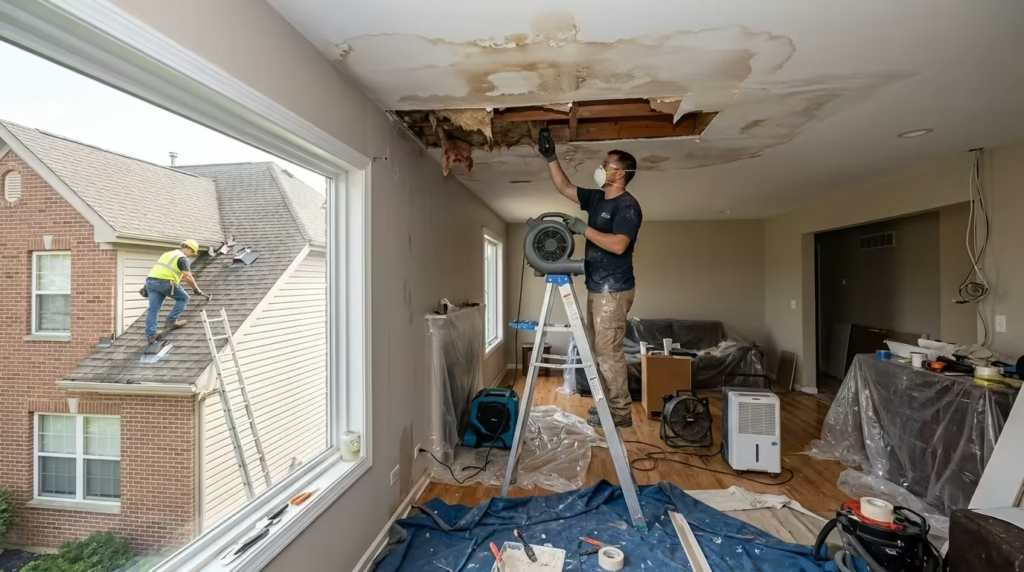
Contain the water
Set a bucket or large pot under the drip and put a towel in the bottom to cut the splashing. Move furniture, rugs, and electronics out of the way. If a bulge has formed, place a bucket directly under it and puncture the lowest point with a screwdriver, standing to the side and wearing eye protection. It feels wrong, but draining the water in one spot beats letting the whole section collapse at once.
Document everything before you clean up
Take photos and short videos of the stains, the drips, and any damaged belongings. Write down when the leak started and what the weather was doing. If you file a homeowners insurance claim, this record will help.
If you can reach the attic safely, look for wet insulation, dark wood, or drips along the rafters, and photograph what you find. Water often runs along a rafter before it drops through the ceiling, so the stain inside rarely sits directly under the hole in the roof. That is why guessing the source from below usually fails.
Call a roofer and give them the right details
Call a roofing company that does leak repair, and say plainly that the leak is active. Be ready to tell them:
- where the stain or drip is, and how fast it is dripping
- when it started and whether it is still raining
- the age and type of your roof, if you know them
Then ask two questions. Can they tarp or temporarily seal the roof now, and when can they do the permanent repair? Their answers will tell you quickly whether they can handle an urgent job.
Temporary protection is not a repair
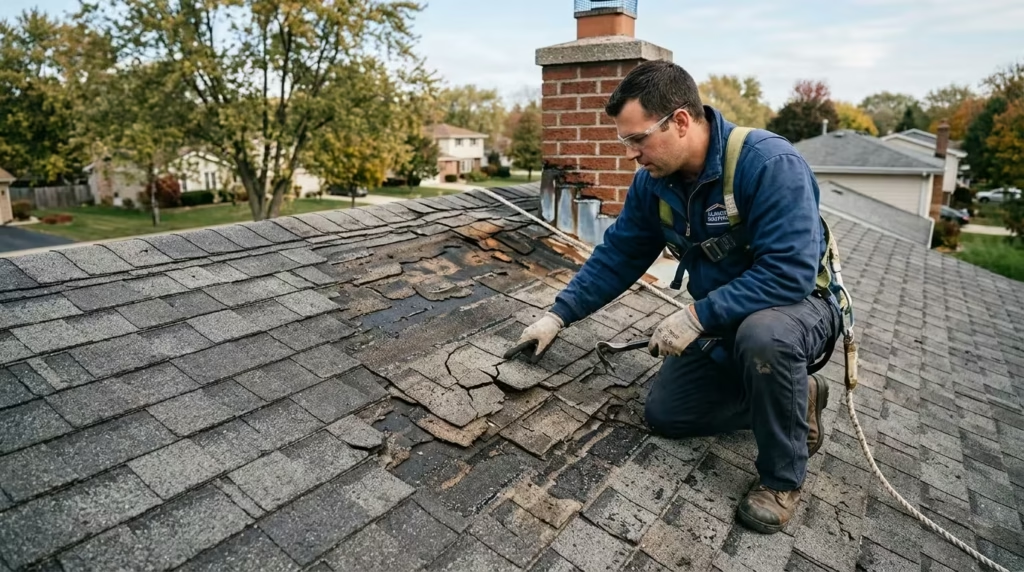
A tarp or temporary patch keeps water out. It does not fix whatever let the water in. The cause might be failed flashing, a cracked vent boot, a missing shingle, or a worn valley, and it will still be there when the tarp comes off. Tarps can also blow loose in high wind. Treat one as a short-term measure and schedule the permanent repair as soon as the weather allows.
What not to do
- Don’t ignore a small leak. A little stain often means water has been getting in for a while.
- Don’t smear roofing cement on from a ladder in the rain. Sealant won’t bond to wet surfaces, and you risk a fall.
- Don’t assume the roof is the cause. Plumbing leaks and condensation can leave similar stains. A roofer can usually tell the difference by checking the attic and the roof surface. (Related: Roof Leak vs. Plumbing Leak: How to Tell the Difference.)
What happens after the leak is stopped
The roofer finds where the water entered and repairs that spot. The inside needs attention too. Wet insulation and drywall should be dried out or replaced, because the EPA advises drying water-damaged materials within 24 to 48 hours to prevent mold growth. If the ceiling has been wet for longer than that, have the area checked before you paint over it.
Carol Stream roofs deal with heavy spring storms, winter ice, and repeated freezing and thawing, all of which wear on flashing and shingles. Many leaks start at those weak points long before anyone sees a stain.
Get a Carol Stream roof leak checked
If water is coming into your home now, call (630) 866-1445 or request a roof leak inspection. Tell us where the water is showing up and when it started, and we will tell you what the next step is.