
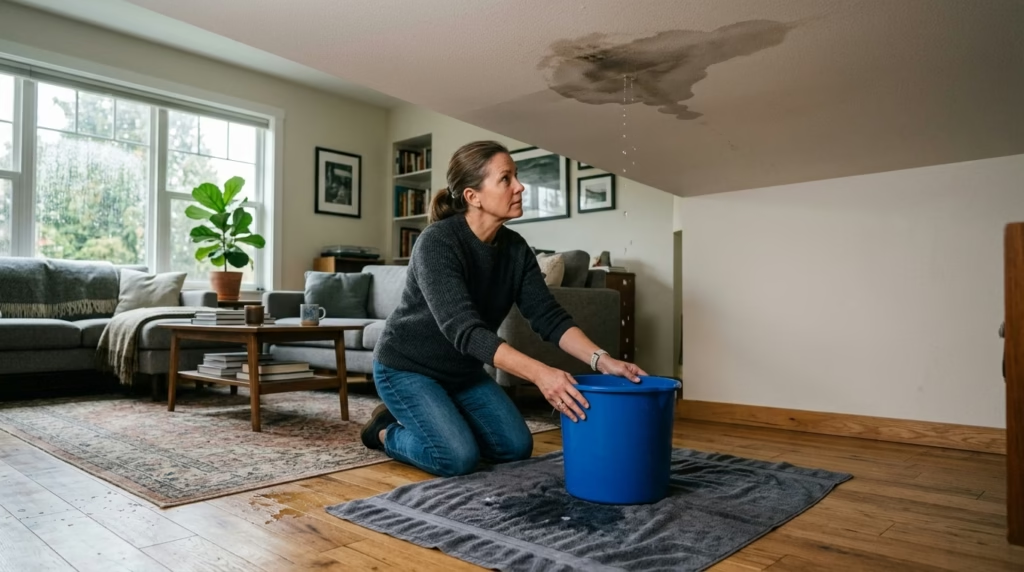
What to Do When Your Roof Is Leaking (Step-by-Step Guide)
Finding water coming through your ceiling is stressful — but a leaking roof is a solvable problem, and the steps you take in the first hours make a huge difference in how much it costs to fix. Knowing what to do if your roof is leaking turns panic into a plan.
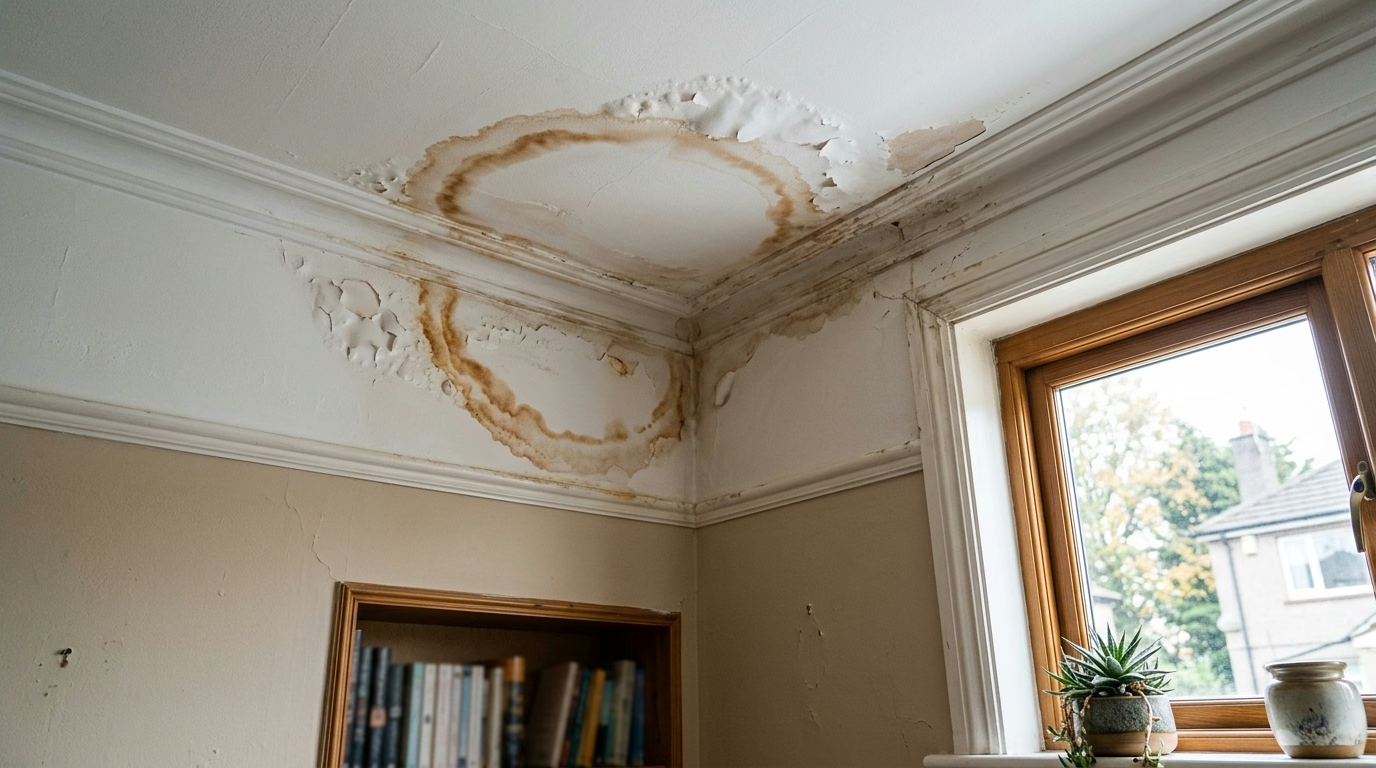
Follow these steps in order. If water is pouring in, near electricity, or a ceiling is sagging, treat it as an emergency roof leak repair and act on the urgent steps first.
What to Do When Roof Is Leaking, Step 1: Stay Calm and Assess Safety
Before anything else, check for danger:
- Electricity: If water is dripping near light fixtures, ceiling fans, outlets, or switches, turn off the breaker for that circuit immediately. Do not touch wet switches or fixtures.
- Ceiling integrity: Look up. A bulging or sagging ceiling means water is pooled above the drywall — keep people and pets away from underneath it.
- Slip hazards: Wet hard floors are treacherous. Put on shoes with grip.
Nothing about a leak is worth an injury. Safety first, property second.
Step 2: Contain the Water Inside
Your job right now is damage control, not repair:
- Catch drips — buckets, stockpots, trash cans, or storage bins under every drip. Drop a towel in the bottom of each to stop splashing.
- Protect the floor — towels, old blankets, or a plastic drop cloth along the drip path and under containers.
- Move valuables — electronics, important papers, rugs, and furniture out of the wet zone. Lift furniture onto blocks or plastic if you can’t move it far.
- Relieve a bulging ceiling — if drywall is sagging with trapped water (and no electrical nearby), poke a small hole at the lowest point with a screwdriver and drain it into a bucket. A controlled drain beats a collapsed ceiling.
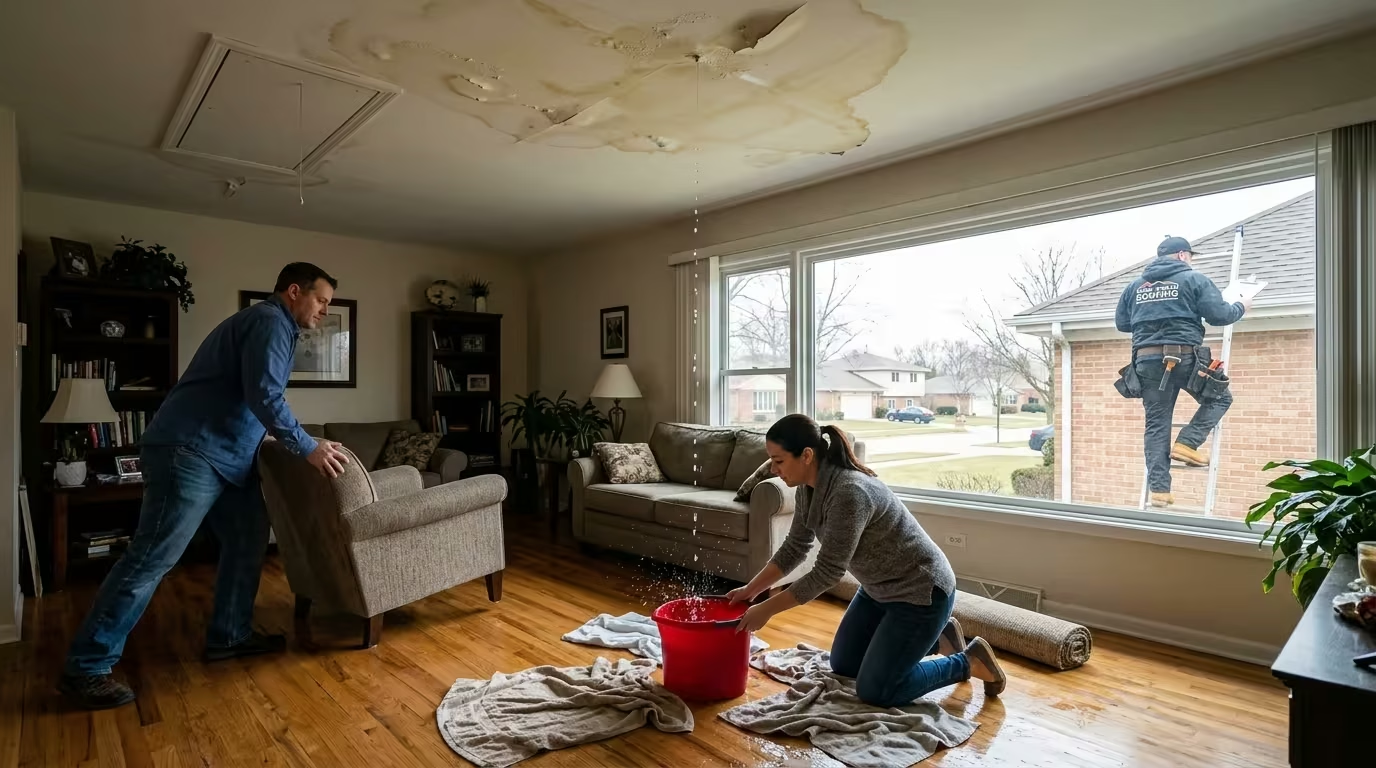
Step 3: Try to Find the Source (Safely)
You don’t need to diagnose the exact problem — but a rough idea of where water enters helps the professional and your insurance claim.
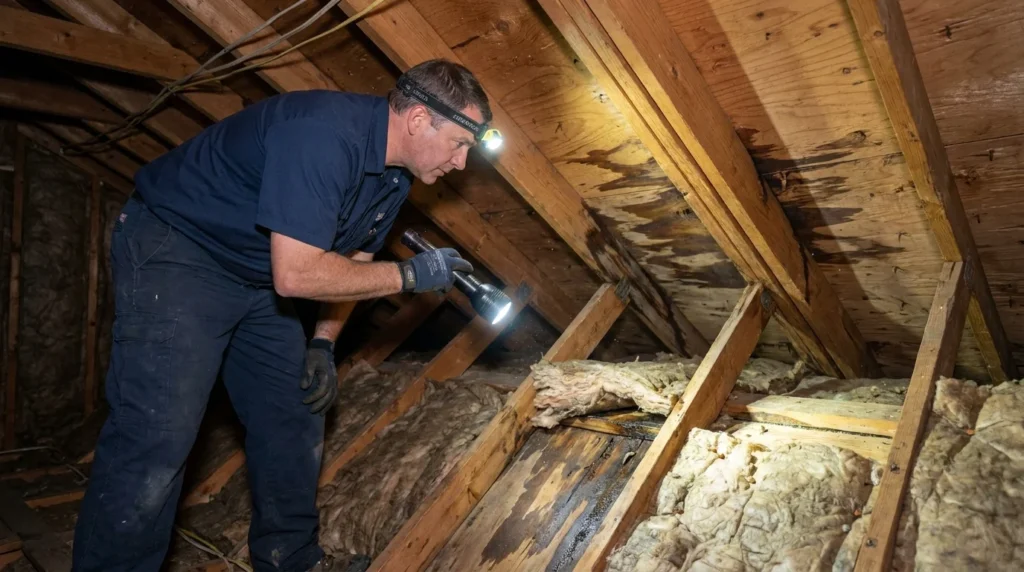
- Check the attic (daylight, safe access only): look for wet insulation, drips, daylight through the roof boards, or water stains on the underside of the decking. Note where you see it.
- Remember: water travels. The stain on your living room ceiling is often 10–20 feet from where water actually enters the roof. It runs down rafters and decking before it drips. Don’t assume the roof directly above the stain is the problem.
- Note the conditions: When did it start? During rain, after snowmelt, only in heavy wind-driven rain? Each pattern points to different causes — wind-driven rain suggests flashing or siding issues; leaks after snowmelt in winter suggest ice dams.
- Don’t go on the roof in the rain, at night, or on a steep/wet surface. Exterior inspection waits for safe conditions.
Step 4: Do a Temporary Fix If You Can Do It Safely
If the leak is active and help is hours or days away, a temporary fix can prevent hundreds in additional damage. Only attempt exterior work in daylight, on a dry roof, with safe footing — and never on a steep roof without proper safety equipment.
Safe temporary measures include:
- Tarping from inside the attic: Drape plastic sheeting over the wet deck area to channel water into a bucket — no roof climbing required.
- A secured tarp on the roof (safe conditions only): Extend the tarp over the ridge so water runs off, and secure it with boards — never nail through shingles you’ll keep.
- Roofing cement on an obvious small gap or cracked vent boot as a short-term seal.
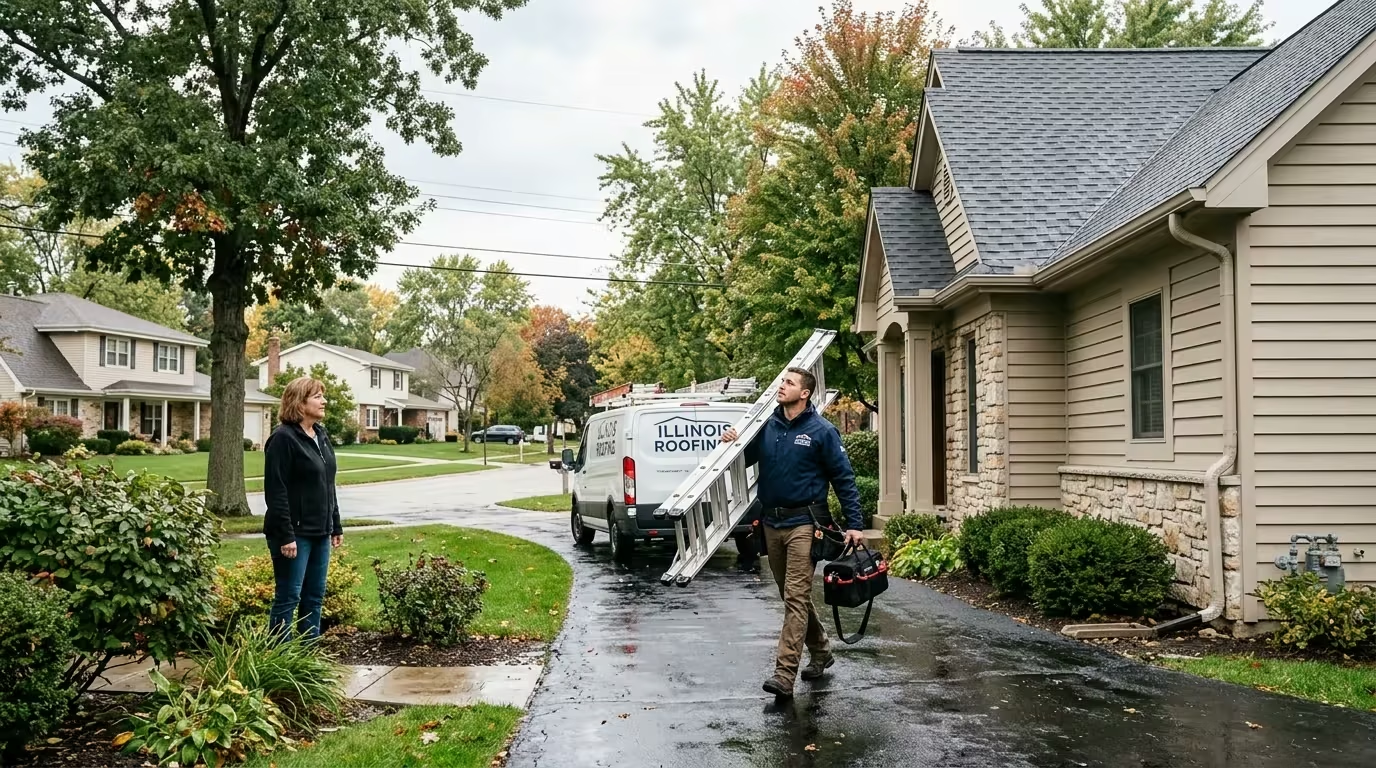
Our full guide to temporary roof repair walks through each method in detail, including what not to do.
Step 5: Document Everything for Insurance and Quotes
While it’s fresh, create a record:
- Photos and video of the leak in action, water stains, damaged belongings, and the roof/attic when safe.
- Dates and weather: when the leak started, what the weather was doing, any recent storms.
- A list of damaged items with approximate values.
- Keep receipts for anything you buy (tarps, buckets) and any emergency service.
This documentation serves two purposes: it supports an insurance claim if the cause was storm damage, and it helps contractors give accurate quotes without multiple visits.
Step 6: Get Professional Quotes
Once the situation is stable:
- Call for an inspection. For Carol Stream and nearby suburbs, call Carol Stream Leak & Restoration at (630) 866-1445 and we’ll connect you with a local repair professional.
- Get 2–3 written quotes for anything beyond a trivial fix. Each should itemize the scope: source of the leak, materials, labor, and whether interior repair is included.
- Ask the key questions: What’s the actual source? How far did water travel? Is the decking damaged? Is this a repair or replacement situation — and why?
- Check pricing against our 2026 roof leak repair cost guide so you know what fair looks like. Local numbers are in our Carol Stream roof leak repair cost.
Step 7: Get the Permanent Repair Done — Then Prevent the Next One
Temporary patches buy time; they don’t solve the problem. Schedule the real repair promptly — most temporary fixes degrade within weeks.
After the repair, reduce your odds of a repeat:
- Annual roof check: Look for lifted shingles, cracked vent boots, and clogged gutters each fall.
- Keep gutters clean: Overflowing gutters push water where it doesn’t belong, including under shingles.
- Trim overhanging branches: They scrape shingles and drop debris that traps moisture.
- Watch the attic: Adequate ventilation and insulation prevent ice dams — a top leak cause in Illinois winters.
- Act on small signs: A faint stain or a single lifted shingle is a $200 problem today and a $2,000 problem next year.
Common Leak Sources (So You Know What the Pro Is Talking About)
| Source | Typical Signs | Usual Fix |
|---|---|---|
| Failed flashing (chimney, vents, valleys) | Leak near chimney or roof penetrations | Reseal or replace flashing |
| Damaged/missing shingles | Leak after windstorm; visible bare spots | Replace shingles |
| Ice dams | Winter leaks near exterior walls | Remove dam; improve attic ventilation |
| Clogged valleys or gutters | Overflow during heavy rain | Clean; repair worn valley |
| Skylight seals | Drip directly below skylight | Reseal or reflash skylight |
| Flat roof membrane puncture | Ponding water; blistering | Patch membrane; fix drainage |
If your leak is on a flat or low-slope section — a porch, addition, or garage roof — the diagnosis and repair methods are different from shingle roofs. See our flat roof leak repair for the full breakdown.
Mistakes That Make a Leak Worse
In the stress of the moment, homeowners often do things that feel helpful but backfire:
- Painting over the stain immediately. It looks better for a week, then the stain bleeds through and you’ve hidden the evidence your contractor and insurer needed to see.
- Poking at the roof with a hose to “find it.” You add water to a saturated assembly and can force water into places it hadn’t reached.
- Hiring the first available person without a written scope. Desperation hiring leads to vague quotes and disputes. Even in a hurry, get the scope in writing — what they’ll do, with what materials, for what price.
- Assuming the leak stopped means the problem stopped. A drip that quits when the rain stops hasn’t fixed itself. The entry point is still open, the insulation is still wet, and the next storm restarts the clock — with interest.
Frequently Asked Questions
What should I do first when I notice my roof is leaking?
Contain the water (buckets, towels, move valuables), check for electrical danger, and relieve any bulging ceiling. Then document the leak with photos. Diagnosis and repair come after the situation is stable.
Can I wait until morning to deal with a roof leak?
If it’s a slow drip with no electrical danger and no sagging ceiling, containing it overnight is usually fine. If water is streaming in, near electricity, or a ceiling is sagging — act now, that’s an emergency.
How do I find where my roof is leaking from?
Check the attic in daylight for wet insulation, drips, or daylight through boards. Remember water travels along rafters, so the entry point is often uphill from the interior stain. A professional traces it definitively during inspection.
Will my roof leak get worse if I wait?
Almost always. Water keeps working: soaking insulation, rotting decking, growing mold. A delay of weeks can easily double the repair bill. At minimum, apply a temporary fix while you arrange the permanent repair.
Should I file an insurance claim for a roof leak?
If a storm (wind, hail, fallen tree) caused it — likely yes. If it’s age or wear — insurance won’t cover it. Document the date, weather, and damage either way, and review your policy’s deductible before deciding.
How long can a temporary roof fix last?
Properly applied tarps and patches typically hold for several weeks to a few months. They’re a bridge to the permanent repair, not a substitute — schedule the real fix promptly.
Take the next step with confidence.
Further Reading
- This Old House: How to Find and Fix a Roof Leak — step-by-step leak-finding and repair walkthrough from a trusted home-improvement source
- Family Handyman: 12 Tips for Finding and Fixing Roof Leaks — practical leak-detection tips for homeowners
External links open in a new tab and are provided for reference; we are not affiliated with these publishers.
Roof leaking in Carol Stream? Get help fast.
Call Carol Stream Leak & Restoration at (630) 866-1445 — we’ll connect you with a local repair professional serving Carol Stream, Bloomingdale, Glendale Heights, Wheaton, Hanover Park, Bartlett, and West Chicago.
Carol Stream Leak & Restoration is a local referral service that connects homeowners with independent local repair professionals; it is not a roofing contractor.