
Illinois Winter Roof Guide: Ice Dams & Roof Leaks in Carol Stream
Every winter, Carol Stream homeowners discover water dripping from ceilings on perfectly dry, sunny February days. No rain, no storm — just snow on the roof and a growing stain. The culprit is almost always an ice dam roof leak, and Illinois winters create ideal conditions for them: heavy snow, sub-freezing nights, and sunny days that start the melt-freeze cycle all over again.
This guide explains how ice dams form, what to do when one is actively leaking into your home, and — most importantly — how to stop them from forming in the first place. If you’re seeing signs of roof leak damage this winter, start here.
What Is an Ice Dam — and How Does It Cause a Roof Leak?
An ice dam is a ridge of ice that builds up along the eaves (the lower edge) of your roof. It forms through a cycle:
- Heat escapes from your living space into the attic (through thin insulation or air leaks), warming the underside of the roof deck.
- Snow melts on the warmer upper roof, and meltwater runs down the slope.
- Water refreezes when it reaches the cold eave — the part of the roof extending past your heated walls, which stays below freezing.
- Ice builds up ridge by ridge, storm by storm, until it forms a dam several inches thick.
- Water pools behind the dam. With nowhere to drain, meltwater backs up under the shingles — and shingles are designed to shed water flowing downhill, not water sitting and pushing uphill beneath them.
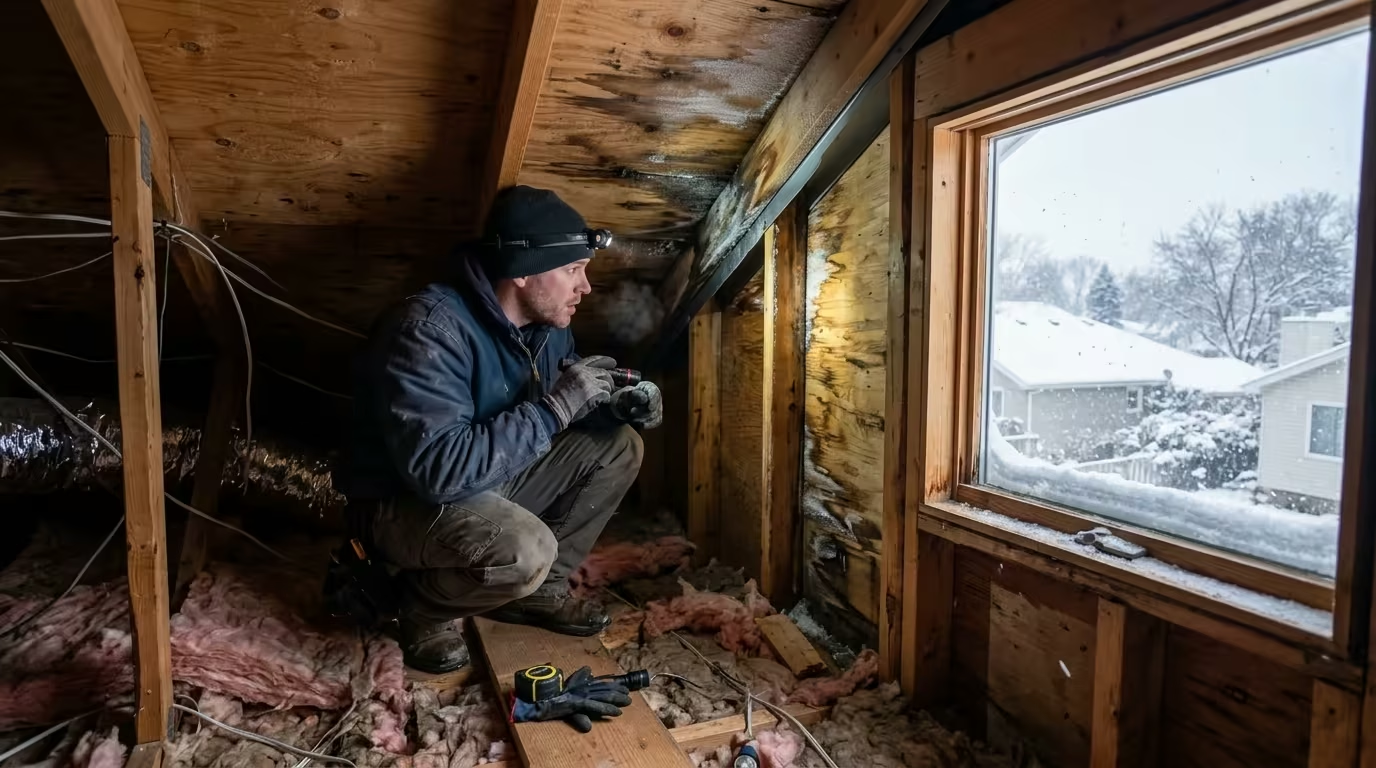
- Water enters your home, soaking the deck edge, dripping into soffits, running down inside exterior walls, and staining ceilings.
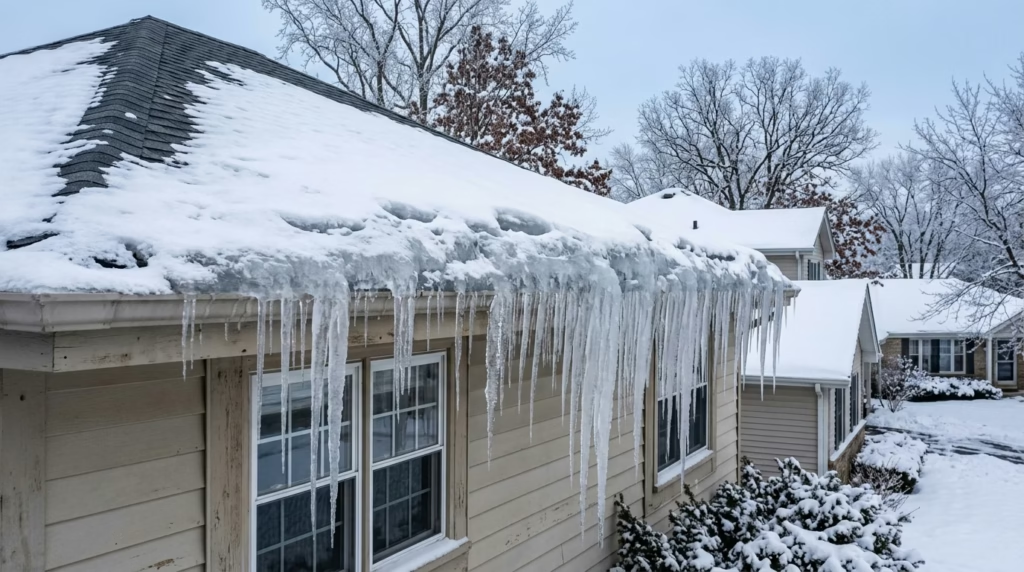
That last step is the ice dam roof leak. Notice what makes it unusual: it happens without rain, often on sunny days, and the water can appear far from the eave — running down inside a wall and emerging as a stain rooms away. Big icicles along your gutters are the visible warning sign that this cycle is underway.
Why Carol Stream Homes Are Especially Vulnerable
Our area stacks the risk factors:
- Freeze-thaw cycling: Chicago-area winters swing above and below freezing repeatedly, restarting the melt-freeze cycle many times per season — each cycle thickens the dam.
- Heavy snow loads: A single lake-influenced storm can drop 6–12 inches, giving the cycle plenty of raw material.
- Housing stock: Many Carol Stream-area homes were built in the 1960s–1980s with attic insulation far below today’s R-38 to R-60 recommendation, and with bathroom or kitchen exhaust fans venting into the attic instead of outside — pumping warm, moist air directly under the roof deck.
- Complex rooflines: Valleys, dormers, and low-slope sections common in suburban designs create natural collection points where dams form first.
If your home is older and you’ve never upgraded attic insulation or ventilation, you’re in the highest-risk group — and a fall how to prevent roof leaks is the single best winter prep you can do.
Emergency: What to Do When an Ice Dam Is Actively Leaking
Water is coming in now. Here’s your action plan, in order:
Inside the House
- Contain the water. Buckets under drips, towels at the base of walls, move furniture and electronics. If water is running inside a wall, it may emerge at outlets — keep the area clear.
- Relieve bulging drywall. If a ceiling bulge is holding water, drain it at its lowest point into a bucket with a small screwdriver hole — controlled drainage beats a sudden collapse.
- Document everything. Photograph the leak, the ice dam outside, and all damage with dates. You’ll need this for insurance.
- Don’t crank the heat to “melt it faster.” More interior heat escaping into the attic feeds the cycle. Keep the thermostat normal.
Outside the House — Safe Steps Only
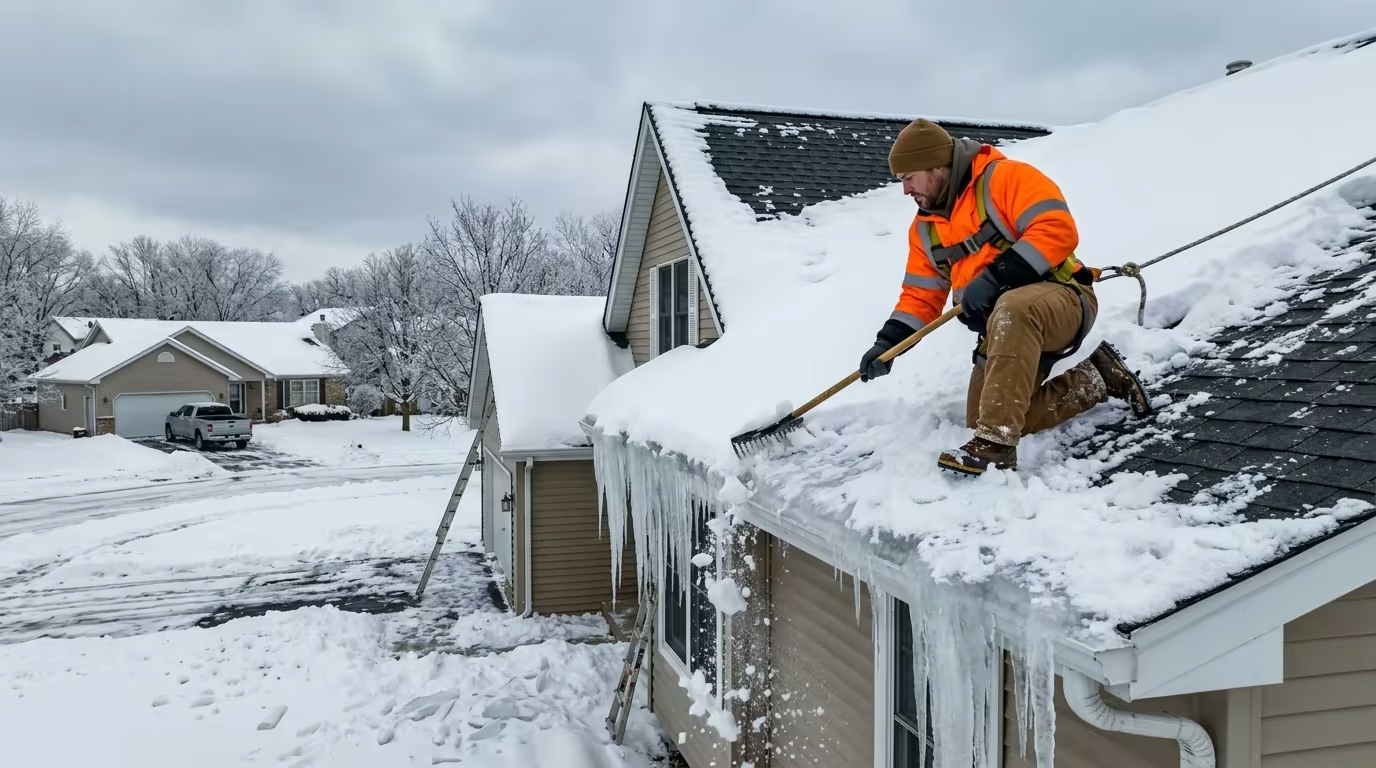
- Use a roof rake from the ground to pull snow off the lower 3–4 feet of roof. Removing the snow removes the meltwater supply. Never climb onto an icy roof — falls from icy roofs are a leading cause of winter ER visits.
- Create a drainage channel with calcium chloride — fill a nylon stocking or pantyhose leg with calcium chloride ice melt (NOT rock salt, which damages shingles and corrodes flashing) and lay it vertically across the ice dam so meltwater has a path to drain. This is a targeted, temporary measure — not a whole-roof de-icing.
- Call a professional for steam removal. The only safe way to remove an established ice dam is low-pressure steam — professionals use specialized steamers that melt channels through the ice without damaging shingles.
What NOT to Do
- Never chip, chop, or hammer at the ice dam. You’ll crack shingles, tear flashing, and void roof warranties — and flying ice shards are dangerous.
- Never use rock salt or chemical de-icers across the roof surface. They corrode metal flashing, kill landscaping below, and damage shingles.
- Never climb onto an icy or snow-covered roof. No leak is worth a fall.
- Never aim a pressure washer at the dam. It forces water under shingles and destroys granules.
Emergency Response Quick-Reference
| Situation | Do This | Don’t Do This |
|---|---|---|
| Water dripping from ceiling | Bucket, towels, drain bulges, photograph | Ignore it until spring |
| Snow piled above the dam | Roof rake from the ground, lower 3–4 ft | Climb onto the icy roof |
| Dam blocking drainage | Calcium chloride in a stocking across the dam | Chip at ice with tools |
| Thick, established dam | Call for professional steam removal | Pressure-wash or rock-salt it |
| Water near outlets/fixtures | Keep area clear, consider cutting power to that circuit | Touch wet electrical components |
Ice Dam Roof Leak Prevention: Stop Ice Dams at the Source
Emergency measures manage the symptom. The cure is keeping the roof deck uniformly cold so snow doesn’t melt from below. Three upgrades work together:
1. Seal Attic Air Leaks
Warm air leaking into the attic is the primary driver. Common leak paths: recessed can lights, the attic hatch or pull-down stairs, plumbing and electrical penetrations, chimney chases, and exhaust fans terminating in the attic. Sealing these with caulk, foam, or proper covers is inexpensive and high-impact — and it also cuts heating bills.
2. Upgrade Attic Insulation to R-38–R-60
For northern Illinois, the Department of Energy recommends R-38 minimum, up to R-60 — roughly 10–17 inches of blown cellulose or fiberglass, depending on material. Many older Carol Stream homes have 6 inches or less. Measure your depth this fall; topping up insulation is one of the highest-ROI improvements a homeowner can make, paying back in both leak prevention and energy savings.
3. Ensure Proper Attic Ventilation
Ventilation carries away whatever heat and moisture still reach the attic, keeping the deck near outdoor temperature:
- Soffit vents must be clear — insulation baffles should hold blown insulation back from the eaves.
- Ridge vents or gable vents provide the exhaust path; confirm they’re unobstructed.
- Bathroom and kitchen exhausts must vent OUTSIDE (through the roof or a gable wall), never into the attic. An attic-terminated bath fan is practically an ice-dam machine.
4. Supporting Measures
- Clean gutters in late fall so meltwater can drain instead of pooling and freezing.
- Consider heat cables along eaves and in gutters as a supplementary measure for problem spots — they manage symptoms on roofs where full insulation upgrades aren’t yet done, but they don’t replace the big three above.
- Ice-and-water shield membrane along eaves is installed during re-roofing and provides a waterproof last line of defense beneath shingles. If you’re due for a roof replacement, confirm your contractor includes it (Illinois code requires it at eaves).
Ice Dams vs. Other Winter Roof Problems
Not every winter leak is an ice dam. Use this to sort them:
- Ice dam: leaks during sunny thaws with snow on the roof; icicles at eaves; stains on exterior walls or ceiling edges.
- Attic condensation: dripping on very cold dry days with no snowmelt; frost on nail tips; scattered small drips rather than one defined leak.
- Wind-driven snow entry: leaks during blizzards through ridge vents or gable vents; usually stops when wind stops.
- Regular roof leak coincidentally in winter: leaks during winter rain events — diagnose it like any how to find a roof leak, remembering that roof leak vs plumbing leak confusion still applies in January.
Will Insurance Cover Ice Dam Damage?
Often, yes — with caveats. Most homeowners policies cover sudden, accidental water damage from ice dams (ruined drywall, flooring, personal property) under the “weight of ice and snow” peril. They typically do not cover the cost of removing the dam itself or of fixing the underlying insulation/ventilation deficiency, and claims can be denied if the insurer determines the damage resulted from long-neglected maintenance.
Protect your claim: document with dated photos, mitigate further damage (your policy requires it), keep receipts for emergency measures, and file promptly. Our guide to water damage roof repair covers the repair and cost side in detail.
Frequently Asked Questions
How fast can an ice dam cause a leak?
A single warm sunny day after a heavy snow can start one leaking if the dam is already established. The cycle compounds: each freeze-thaw day thickens the dam and pools more water behind it. Homes with poor insulation can develop leaking dams within 24–48 hours of a big snow followed by sun.
Are icicles always a sign of ice dams?
Large, thick icicles along the eaves strongly suggest heat loss and dam formation. Small, thin icicles after a light snow are normal. The warning pattern is heavy icicle formation combined with snow remaining on the upper roof while the eave area shows thick ice buildup.
Can I prevent ice dams just by raking snow off the roof?
Roof raking helps — removing snow removes the meltwater supply — and it’s good emergency practice. But it’s labor-intensive all winter and doesn’t fix the heat loss causing the problem. Treat raking as a stopgap while you plan insulation and air-sealing upgrades.
Is steam removal expensive?
Professional steam removal typically runs a few hundred dollars for a targeted section — far less than the interior water damage an active leak causes in a single week. If water is entering your home, it’s money well spent.
Should I install heat cables or fix the insulation?
Fix the insulation and air leaks first — they solve the root cause, lower energy bills, and protect the whole roof. Heat cables are a reasonable supplement for stubborn spots (like north-facing valleys) after the big three are addressed, not a substitute for them.
Do new roofs prevent ice dams?
A new roof with proper ice-and-water shield at the eaves resists the damage from dams, but the dams themselves form due to attic heat loss — which is independent of shingle age. Even a brand-new roof can leak from ice dams if the attic is under-insulated. Address the attic, whatever the roof’s age.
Winter Leak in Progress? Get Local Help Fast
Further Reading
- U.S. Department of Energy: Energy Saver — official guidance on insulation, ventilation, and ice-dam prevention
- This Old House: How to Find and Fix a Roof Leak — step-by-step leak-finding and repair walkthrough from a trusted home-improvement source
External links open in a new tab and are provided for reference; we are not affiliated with these publishers.
Roof leaking in Carol Stream? Get help fast.
Call Carol Stream Leak & Restoration at (630) 866-1445 — we’ll connect you with a local repair professional serving Carol Stream, Bloomingdale, Glendale Heights, Wheaton, Hanover Park, Bartlett, and West Chicago. Related service: Ice Dam Roof Repair in Carol Stream, IL.
Carol Stream Leak & Restoration is a local referral service that connects homeowners with independent local repair professionals; it is not a roofing contractor.