
How to Prevent Roof Leaks: 12-Point Checklist
Every roof leak you’ve ever heard about started as a small, preventable problem — a clogged gutter, a cracked pipe boot, a handful of lifted shingles. Learning how to prevent roof leaks isn’t complicated or expensive. It’s a short list of inspections and maintenance tasks, done twice a year, that keep small issues from becoming ceiling stains, mold, and rotted decking.
This 12-point checklist is written for homeowners in Carol Stream and the surrounding suburbs, where freeze-thaw cycles, heavy spring rains, and snow-loaded winters punish roofs in specific ways. Work through it each spring and fall, and you’ll catch nearly every common leak source before it fails. And if you’re already seeing signs of roof leak damage, start with our how to find a roof leak first — then use this checklist to make sure it doesn’t happen again.
The 12-Point Roof Leak Prevention Checklist
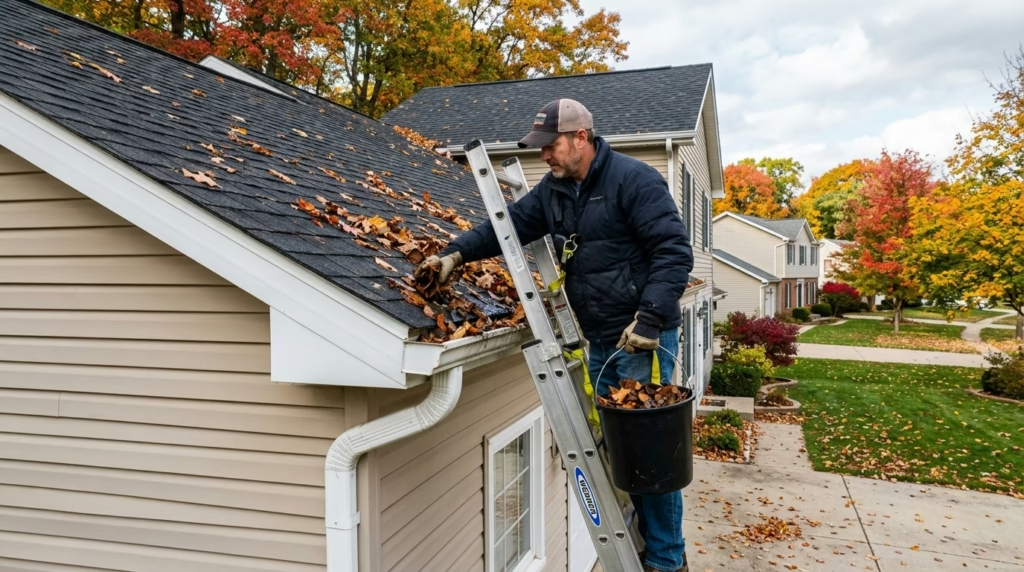
1. Clean Gutters and Downspouts (Spring & Fall)
Clogged gutters are one of the most common — and most preventable — causes of leaks. When gutters overflow, water backs up under the eaves and soaks the roof deck edge, fascia, and soffit. In winter, clogged gutters also feed ice dam roof leak.
- Scoop out leaves, twigs, and granule sediment twice a year (late fall after leaves drop, spring after seed pods and storms).
- Run a hose through downspouts to confirm flow; clear clogs with a plumber’s snake.
- Check that gutters slope toward downspouts and that downspout extensions carry water at least 4–6 feet from the foundation.
2. Inspect Shingles from the Ground
You don’t need to walk the roof for this. With binoculars from the yard, scan for missing, cracked, curled, or lifted shingles, plus dark patches where granules have worn away. Pay special attention after windstorms and hail — Carol Stream sees both.
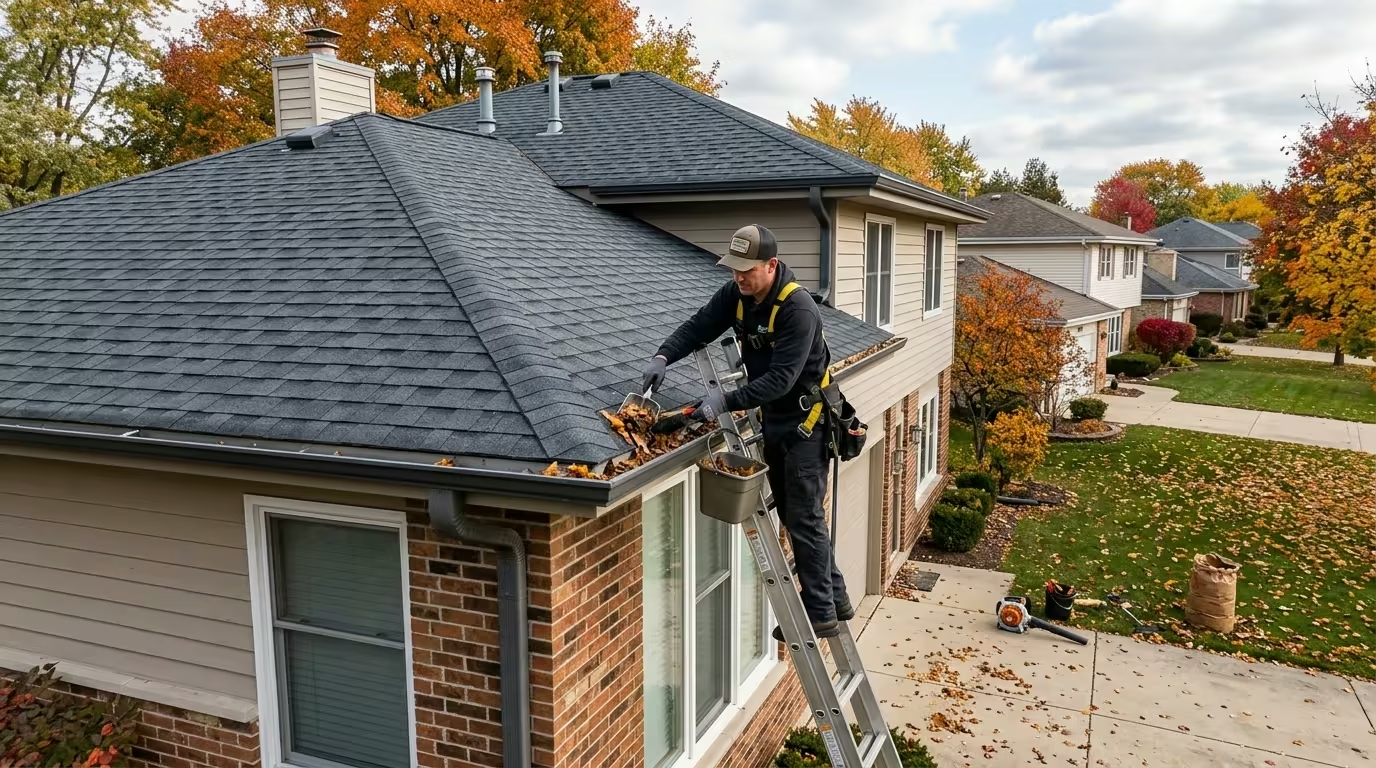
Mark any damage you spot and have it repaired promptly. A single missing shingle is a direct path for water to the underlayment, and underlayment alone won’t hold out rain for long.
3. Check Flashing Around Chimneys, Vents, and Walls
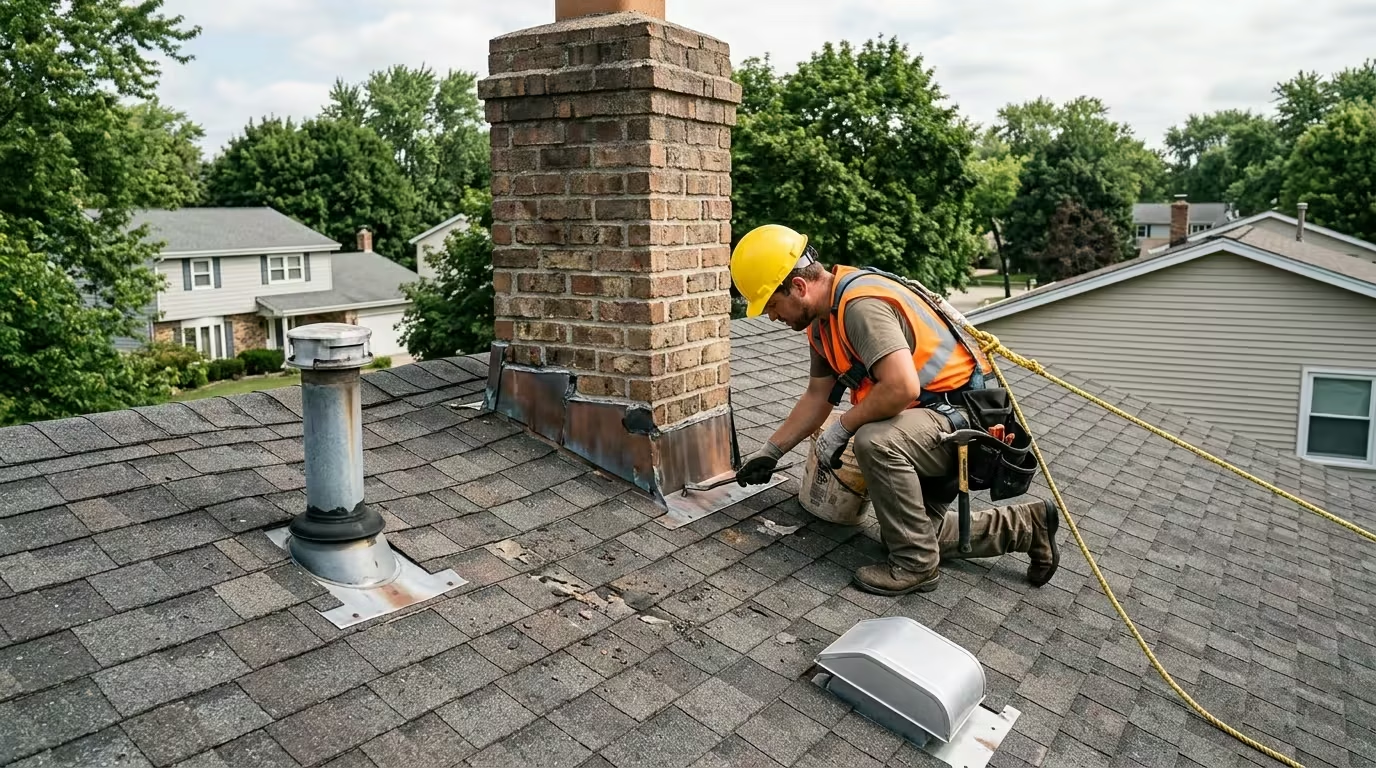
Flashing — the metal strips sealing roof transitions — is the leak-prevention MVP and the most frequent failure point. Inspect (from a ladder or with binoculars):
- Chimney flashing: look for rust, gaps, or separated step flashing at the chimney base, and check the mortar crown for cracks.
- Vent pipe boots: the rubber collars around plumbing vents crack from UV exposure in 8–15 years. Cracked boots are the #1 single leak source we see — learn more in our roof vent leak repair guide.
- Wall and dormer flashing: where any wall meets the roof, step flashing should be tight with no visible gaps.
4. Seal and Inspect Skylights
Skylights are wonderful until their seals fail. Check skylight frames for cracked sealant, condensation between panes (a failed glass seal), and dampness in the skylight well below. Re-caulk exterior frame joints with a high-quality polyurethane sealant as needed — but if the flashing beneath is the problem, that needs a roofer. See our skylight leak repair guide for the full breakdown.
5. Keep Roof Valleys Clear
Valleys — where two roof slopes meet — channel the most water on your roof, so debris piled there is a leak waiting to happen. Leaves and branches trap moisture against the valley flashing and shingles, accelerating wear and creating dams that push water sideways under shingles.
Clear valleys of debris each fall. From the ground with binoculars, check that valley metal isn’t rusted through and that shingles along the valley lie flat.
6. Trim Overhanging Tree Limbs
Branches rubbing against shingles grind away protective granules with every wind gust. Overhanging limbs also drop leaves directly into gutters and valleys, shade the roof (slowing drying and encouraging moss), and become battering rams in storms.
Keep limbs trimmed back at least 6–10 feet from the roof surface. After major storms, check for fallen branches and impact damage even if limbs were previously clear.
7. Check Attic Ventilation
Poor attic ventilation traps heat and moisture — and both destroy roofs from the inside. In summer, a superheated attic bakes shingles from below, shortening their life. Year-round, trapped moisture condenses on the cold underside of the roof deck, mimicking leaks and rotting wood.
- Confirm soffit vents aren’t blocked by insulation (baffles should hold insulation back).
- Check that ridge vents or gable vents are unobstructed.
- Look for rust on nail tips or a musty smell — both signal excess attic moisture.
8. Check Attic Insulation Depth
Insulation and ventilation work as a team. Inadequate insulation lets house heat escape into the attic, melting roof snow unevenly — the root mechanism behind ice dams. The U.S. Department of Energy recommends R-38 to R-60 for attics in northern Illinois (roughly 10–17 inches of fiberglass batts or blown cellulose, depending on type).
Measure your insulation depth during your fall check. Topping up insulation is one of the highest-ROI leak-prevention moves for Illinois homes.
9. Inspect the Attic for Early Warning Signs
Twice a year, spend ten minutes in the attic with a flashlight — stepping only on joists, never on drywall:
- Dark stains or rings on the underside of the roof deck
- Damp or compressed insulation
- Daylight visible through the deck
- Musty odors or visible mold
Catching a stain in the attic months before it reaches your ceiling is the entire point of preventive maintenance.
10. Reseal Exposed Fasteners and Small Gaps
Exposed nail heads (from satellite dishes, old antenna mounts, or popped nails) are tiny direct channels for water. Dab roofing cement or a polyurethane sealant over any exposed fastener heads you can safely reach, and re-secure or remove abandoned mounts.
Similarly, check sealant joints around exhaust fan vents and any rooftop equipment — sealant dries and cracks over time, and a $10 tube of sealant prevents a $500 repair.
11. Watch for Moss, Algae, and Debris Buildup
Moss holds moisture against shingles around the clock, lifting shingle edges and creating capillary paths for water. On shaded north-facing slopes common in our area, treat moss early: a gentle application of zinc sulfate or a moss-killing roof treatment (never pressure washing, which strips granules).
Keep the roof surface clear of accumulated leaves and branches — anything that holds moisture against shingles shortens their life and invites leaks.
12. Schedule a Professional Roof Inspection Every 2–3 Years
Your twice-yearly homeowner checks catch most problems, but a professional inspection every 2–3 years (or after any major hailstorm or wind event) catches what you can’t see: failing underlayment, deteriorating flashing details, soft decking spots, and installation defects. A pro can also verify whether your roof is a candidate for targeted asphalt shingle roof leak repair versus broader work.
Think of it like a dental checkup: cheap, periodic, and vastly cheaper than the emergency it prevents.
Seasonal Maintenance: How to Prevent Roof Leaks in Carol Stream
Illinois weather gives roofs a specific annual beating. Time your checklist to it:
| Season | Priority Tasks | Why |
|---|---|---|
| Spring (Apr–May) | Clean gutters of spring debris; inspect for winter/ice-dam damage; check attic for melt-season stains; trim limbs before leaf-out | Freeze-thaw and ice dams do their damage in winter — spring is when you find and fix it |
| Summer (Jun–Aug) | Ventilation check; moss treatment; reseal fasteners; schedule pro inspection | Heat and UV age sealants and shingles; attic heat reveals ventilation problems |
| Fall (Sep–Nov) | Full 12-point checklist; clean gutters after leaves drop; check insulation depth before winter | Prepares the roof for snow load and ice-dam season — the most important check of the year |
| Winter (Dec–Mar) | Monitor for ice dams after heavy snow; check attic after thaws; keep gutters’ downspout exits clear of snow | Active monitoring season — catch ice dams early before they leak |
Prevention vs. Repair: The Cost Math
Preventive maintenance isn’t just about avoiding hassle — it’s about money. Typical ranges in our area:
- Gutter cleaning (DIY): $0 and an afternoon, or ~$150–$250 professionally
- Pipe boot replacement: ~$200–$400
- Minor flashing repair: ~$300–$600
- Ceiling repair from an ignored leak: $500–$1,500 per room
- Mold remediation: $1,500–$5,000+
- Rotted decking replacement: adds $1,000s to any re-roof
One afternoon with this checklist twice a year is the best home-maintenance ROI there is.
Frequently Asked Questions
How often should I inspect my roof to prevent leaks?
Walk through this checklist every spring and fall — twice a year. Add a quick ground-level scan after any severe storm (high winds, hail, heavy ice). And schedule a professional inspection every 2–3 years.
What’s the single most important leak-prevention task?
Keep water moving off the roof: clean gutters and clear valleys. The majority of preventable leaks trace back to water being trapped or redirected where it doesn’t belong. After that, watch your pipe boots and flashing — they’re the most common point failures.
Can I prevent leaks on an older roof, or is replacement the only option?
Maintenance absolutely extends an older roof’s life. A 20-year-old roof that’s been maintained — sealed boots, intact flashing, clear drainage — can outlast a neglected 12-year-old roof. That said, be realistic: if you’re patching new leaks every season, have a pro assess whether continued repairs still make sense versus broader work.
Do gutter guards eliminate the need for gutter cleaning?
They reduce it but don’t eliminate it. Guards keep out large leaves but fine debris, seeds, and shingle granules still accumulate — and guards themselves need periodic clearing. Check guarded gutters at least once a year.
Will my homeowners insurance reward preventive maintenance?
Insurers won’t typically discount for it directly, but documented maintenance massively strengthens any future claim — insurers routinely deny water-damage claims when the damage traces to neglected maintenance. Keep dated photos of your inspections.
Is it safe to do this checklist myself?
The ground-level, ladder-at-eave, and attic portions are safe for most homeowners following basic precautions (stable ladder, dry conditions, stepping only on joists in the attic). Never walk a wet, icy, or steep roof, and never work near power lines. When in doubt, the inspection portion is exactly what professionals are for.
Keep Your Roof Leak-Free Year-Round
Further Reading
- Family Handyman: 10 Roof Problems and What to Do About Them — common roofing problems and their fixes
- U.S. Department of Energy: Energy Saver — official guidance on insulation, ventilation, and ice-dam prevention
External links open in a new tab and are provided for reference; we are not affiliated with these publishers.
Roof leaking in Carol Stream? Get help fast.
Call Carol Stream Leak & Restoration at (630) 866-1445 — we’ll connect you with a local repair professional serving Carol Stream, Bloomingdale, Glendale Heights, Wheaton, Hanover Park, Bartlett, and West Chicago.
Carol Stream Leak & Restoration is a local referral service that connects homeowners with independent local repair professionals; it is not a roofing contractor.