
Asphalt Shingle Roof Leak Repair: What Homeowners Should Know
Asphalt shingles cover roughly 80% of American homes, and Carol Stream is no exception. They’re affordable, easy to install, and good for 20–30 years. But when asphalt shingle roof leak repair becomes necessary, most homeowners have the same two questions: what’s actually causing this, and do I really need a professional — or can I fix it with a ladder and a tube of sealant?
This guide answers both. We’ll cover the failure patterns we see most often on shingle roofs in the Chicago suburbs, realistic repair costs, and exactly where the line is between a safe DIY fix and a call-a-pro situation. If you’re still not sure the water is coming from the roof at all, start with how to tell a roof leak from a plumbing leak — it takes about two minutes to rule out.
Why Asphalt Shingle Roofs Leak
Shingles themselves are waterproof. Leaks happen when the system fails — the shingles, underlayment, and flashing working together get compromised. Illinois weather is rough on that system: summer heat bakes shingles until they curl, winter ice dams force water uphill under them, and spring storms test every nail and seal.
Cracked, Curling, or Cupped Shingles
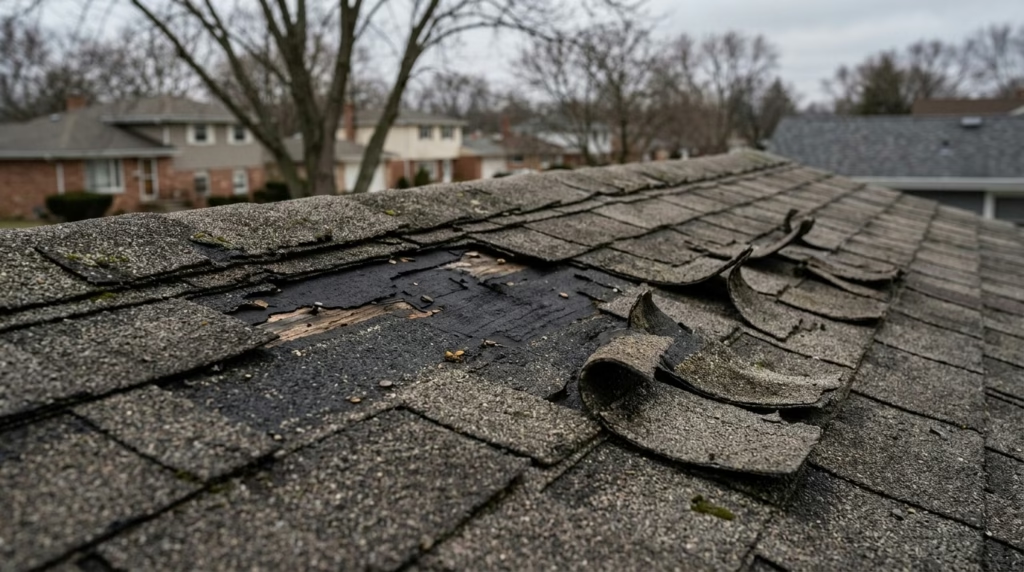
Age and heat are the drivers. UV breaks down the asphalt binder, and once the shingle loses flexibility it cracks under foot traffic or thermal stress. Curling (edges turning up) and cupping (middle sagging) lift the shingle off the one below, letting wind-driven rain sneak underneath.
Single cracked shingles are a minor, cheap fix. But widespread curling across a slope means the shingles are at end of life — patching one curl while the rest keep failing is a losing strategy.
Missing Shingles
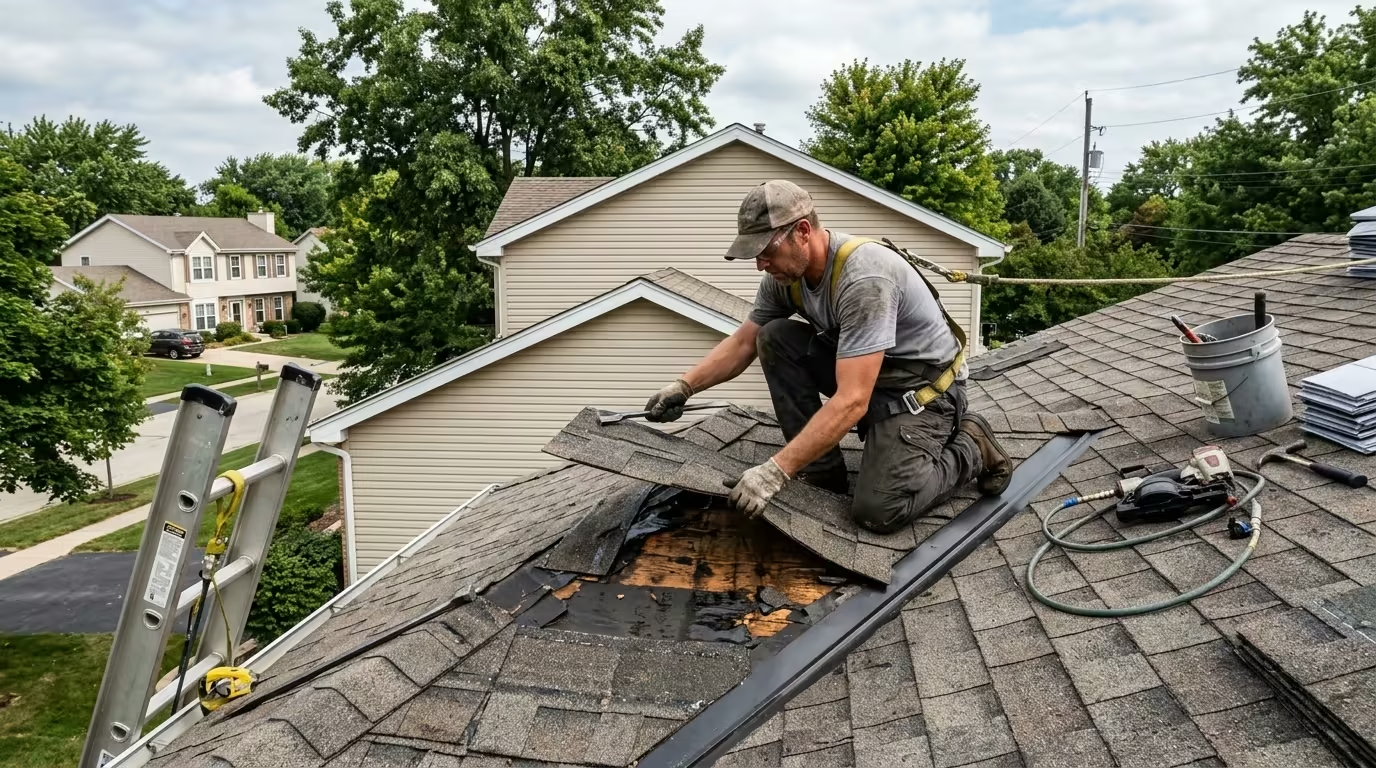
High winds — and the Chicago suburbs get their share — can rip shingles clean off, especially if the original installer skipped the sealant strip activation or the roof is past its prime. A missing shingle exposes the underlayment, which is water-resistant but not waterproof; it buys you days, not months.
Check your yard after every windstorm. If you find shingles, the roof has a hole until it’s patched.
Nail Pops
Roofing nails work their way up over time as the deck expands and contracts. The shingle above the popped nail lifts slightly, and rain runs down the nail shank straight into the deck. Nail pops are sneaky because from the ground the roof looks fine — you only see them up close. They’re also one of the most common sources of interior signs of a roof leak like small ceiling stains with no obvious exterior damage.
Valley Leaks
Roof valleys — where two slopes meet — carry concentrated water flow. They’re sealed with either woven shingles or metal valley flashing, and both fail. Debris builds up in valleys (leaves, granules), water dams behind it, and backs up under the shingles. Metal valleys corrode or pull away from fasteners. If your ceiling stain sits under a valley line, this is suspect number one.
Step Flashing Failures
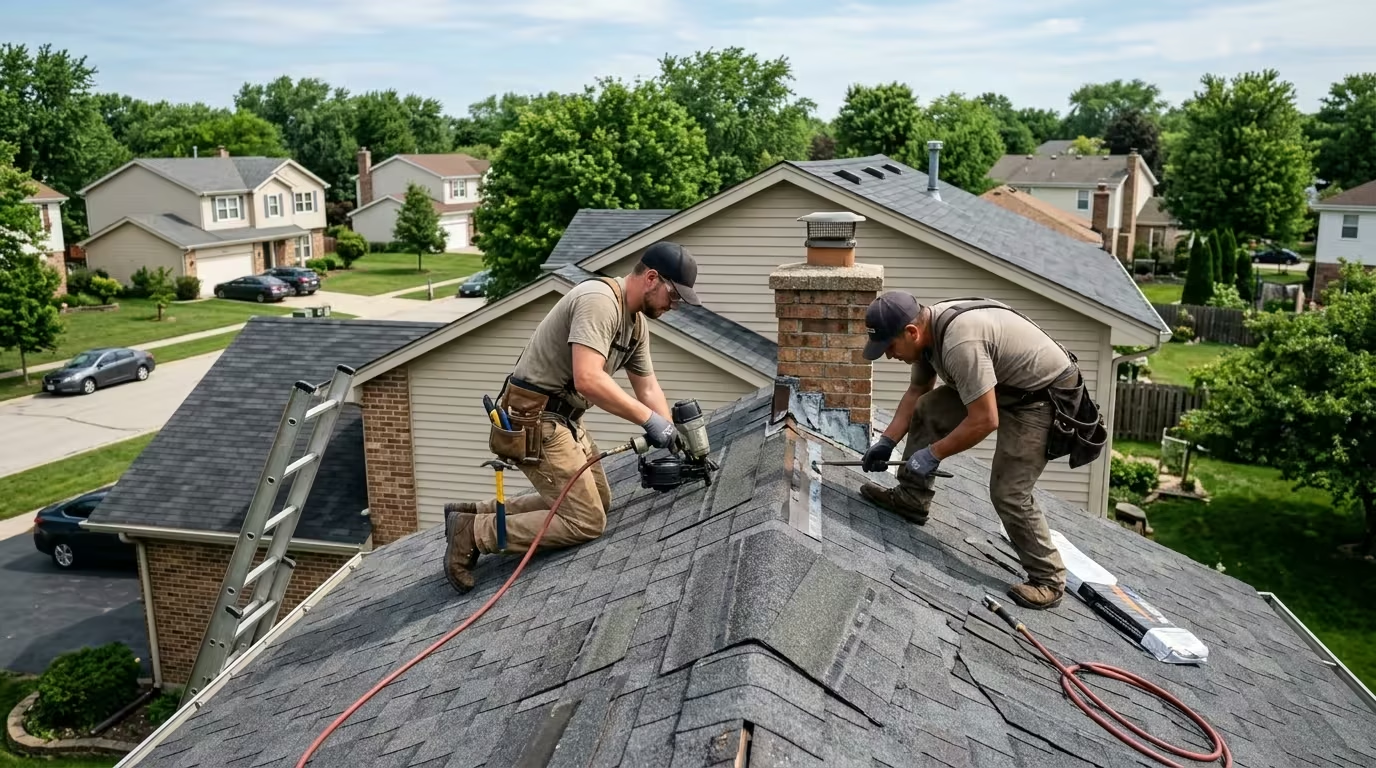
Where the roof meets a wall — dormers, additions, chimneys — step flashing (overlapping L-shaped pieces) keeps water out. The classic failure: a previous roofer or homeowner caulked over the flashing instead of replacing it, or the flashing was installed wrong (shingle over flashing instead of the reverse). Step flashing repairs require removing several shingles to get at it — not a ground-level job.
Worn Sealant Strips
Each shingle has a factory sealant strip that bonds it to the shingle below, creating the wind-resistant laminated layer. On older roofs or in areas of high heat, the strips never fully activate or release over time. Unsealed shingles lift in wind and let rain blow underneath.
Asphalt Shingle Roof Leak Repair Costs
| Repair | Typical cost range |
|---|---|
| Replace 1–5 shingles | $150 – $350 |
| Nail pop repair (per area) | $150 – $300 |
| Valley flashing repair | $500 – $1,000 |
| Step flashing replacement (per location) | $400 – $800 |
| Chimney flashing rework | $750 – $1,500 |
| Partial re-roof (one slope) | $2,500 – $6,000 |
Most homeowners land in the $300–$800 range for a straightforward leak fix. Costs climb with steep pitch, two-story access, multiple layers of old roofing (tear-off labor), and specialty shingles like architectural or designer lines. Always ask whether the quote includes underlayment replacement in the repaired area — a shingle-only patch over damaged felt is a future leak.
DIY vs. Pro: Where’s the Line?
Safe DIY territory (if you’re comfortable on a ladder)
- Replacing a few blown-off shingles on a low, accessible slope with matching shingles and roofing nails — straightforward if the underlayment is intact.
- Sealing a nail pop: lift the shingle, re-drive or replace the nail, apply a dab of roofing sealant, press the shingle back down.
- Emergency tarping: covering an active leak area with a secured tarp buys time until a pro arrives. Use 2x4s to anchor the tarp, never nail through it in the field of the roof.
Call a pro when
- The leak source isn’t obvious. Randomly smearing sealant wastes money; a pro traces the entry point before touching anything.
- Flashing is involved. Chimney, valley, step, and skylight flashing repairs require removing and reinstalling shingles — get it wrong and you create two leaks.
- The roof is steep, high, or wet. No repair is worth a fall. Professionals have the equipment and the insurance.
- Multiple leaks or widespread damage. Three-plus leak points usually signal a system problem (end of life, ventilation issues) that needs a full assessment.
- Mold or structural damage. If the leak has been going on long enough to rot decking or grow mold, remediation is not a DIY job — see our guide on roof leak water damage repair.
One honest rule of thumb: if the repair requires you to remove more than two shingles to access the problem, call a professional. The risk of mis-sequencing the shingle layers and creating a bigger leak outweighs the savings.
The Repair Process: What a Good Tech Does
- Interior inspection first. Attic staining, wet insulation, and drip patterns tell the tech where to look outside — usually uphill of the interior stain.
- Exterior diagnosis. Shingle condition, flashing integrity, valley condition, and penetration seals get checked in order.
- Photo documentation. You should receive photos of the failure before work starts. No photos, no quote — that’s the standard to hold.
- Layered repair. Damaged shingles come off, underlayment gets inspected and replaced if compromised, flashing gets rebuilt correctly, then new shingles go on with proper nailing pattern and sealant.
- Water test. A hose test from above the repair confirms it’s watertight.
When Repair Stops Making Sense
Repairs are right for isolated failures on an otherwise healthy roof. Consider replacement when:
- The roof is 20+ years old and leaks are recurring in different spots
- Granule loss is heavy (check your gutters — piles of granules mean the shingles are shedding their armor)
- More than 30% of a slope needs work
- The decking is soft or sagging
- Repair estimates keep climbing past a third of replacement cost
If you’re debating materials for the replacement, our metal roof leak repair guide covers the trade-offs from the leak-resistance side — metal costs more upfront but fails in fewer, more predictable ways.
Preventing Shingle Roof Leaks
Most shingle leaks are preventable with boring, regular maintenance:
- Clean gutters twice a year. Clogged gutters back water up under the shingle edge — see our roof leak prevention checklist for the full routine.
- Trim overhanging branches. Falling limbs crack shingles; rubbing branches wear off granules.
- Check after storms. A 10-minute ground-level look for missing shingles after wind events catches problems early.
- Keep attic ventilation working. Poor ventilation bakes shingles from underneath and shortens their life by years — a common silent killer on older Carol Stream homes.
- Address ice dams before they form. In Illinois, ice dam roof leaks are a leading winter leak cause; proper insulation and ventilation prevent them.
FAQ
How much does it cost to repair an asphalt shingle roof leak?
Most single-leak repairs run $300–$800, covering diagnosis, shingle replacement, and minor flashing work. Flashing rebuilds at chimneys or valleys run $750–$1,500. Widespread damage or multi-slope issues move into the $2,000+ range.
Can you repair a roof leak in winter?
Yes, with caveats. Sealants don’t cure well below freezing and shingles are brittle when cold, so winter repairs focus on emergency fixes (tarping, temporary sealing) with permanent work scheduled for a warmer window. Ice-dam-related leaks often need the ice addressed first.
How long does a shingle leak repair last?
A properly layered repair — new shingles, intact underlayment, correct flashing — lasts as long as the surrounding roof, typically 10–20+ years. A surface patch (sealant over the top) buys months to a couple of years at best.
Will insurance cover my shingle roof leak repair?
It depends on the cause. Sudden damage (wind tearing off shingles, a fallen branch) is typically covered; gradual wear, age, and neglected maintenance are not. Document everything with photos and timestamps before repairs — see our water damage roof repair guide for the documentation steps that matter.
How do I match replacement shingles to my existing roof?
Take a sample shingle (or a clear photo plus the shingle’s brand markings from underneath) to a roofing supplier. Exact matches on older roofs are often impossible — colors get discontinued — so pros aim for the closest blend and place the patch in the least visible spot. For highly visible slopes, that mismatch is worth knowing about before you approve the work.
Further Reading
- Family Handyman: 10 Roof Problems and What to Do About Them — common roofing problems and their fixes
- This Old House: How to Find and Fix a Roof Leak — step-by-step leak-finding and repair walkthrough from a trusted home-improvement source
External links open in a new tab and are provided for reference; we are not affiliated with these publishers.
Roof leaking in Carol Stream? Get help fast.
Call Carol Stream Leak & Restoration at (630) 866-1445 — we'll connect you with a local repair professional serving Carol Stream, Bloomingdale, Glendale Heights, Wheaton, Hanover Park, Bartlett, and West Chicago.
Carol Stream Leak & Restoration is a local referral service that connects homeowners with independent local repair professionals; it is not a roofing contractor.